


Chop it four ways.
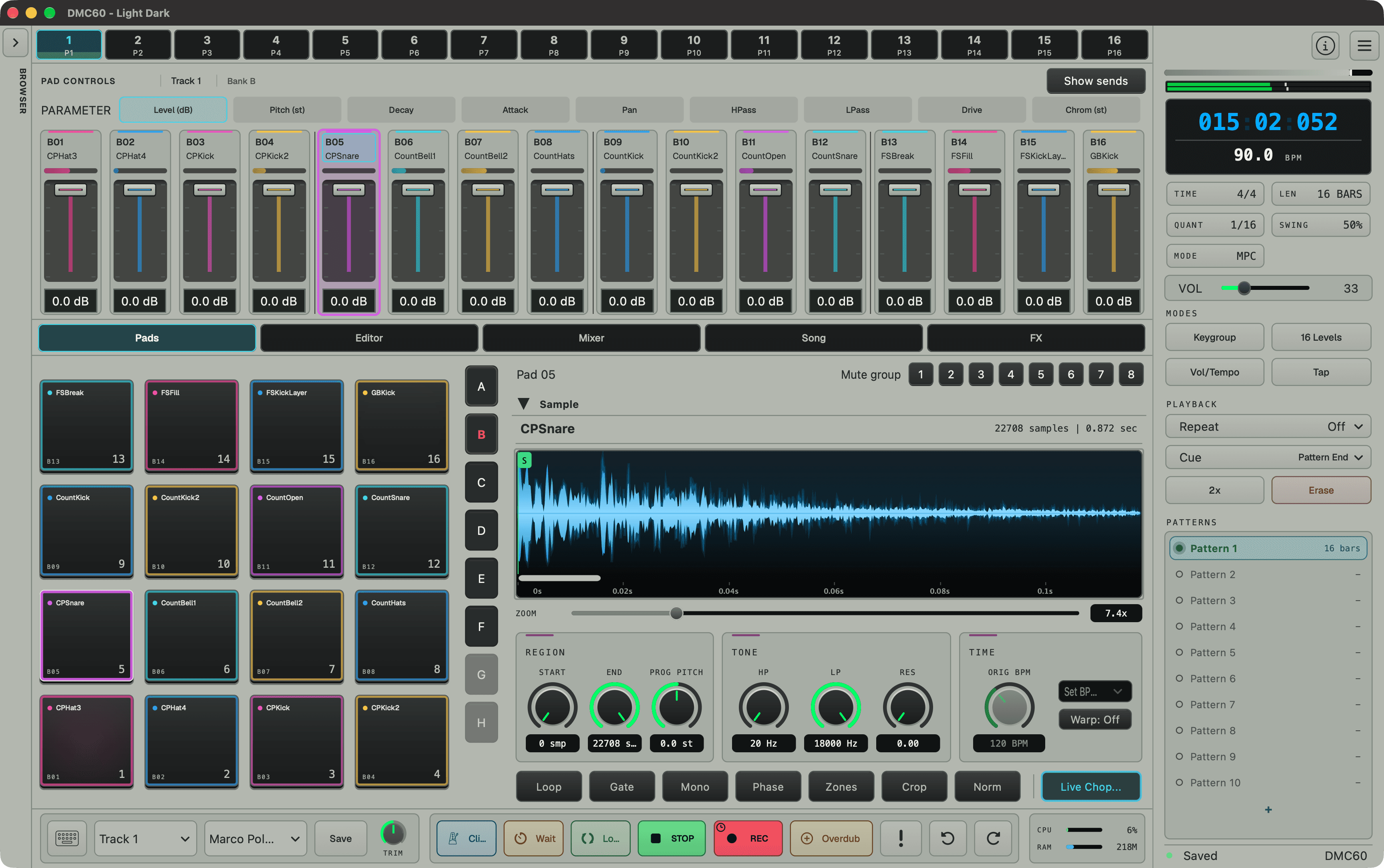
Slice by transient, divide evenly, place markers, or tap pads live. Your original sample stays intact.
DMC60 · Drum machine & sampler
A drum machine and sampler for your DAW or desktop. Chop a break, build a kit, sequence with hardware swing, and export your track. Vintage 12-bit character or clean hi-res sound.
Full trial, including saving & export. No credit card.
Buy once · 3 computers · Updates through this major version.
Mac & Windows Standalone · VST3 · AU
Check system requirementsClassic, Dark or System
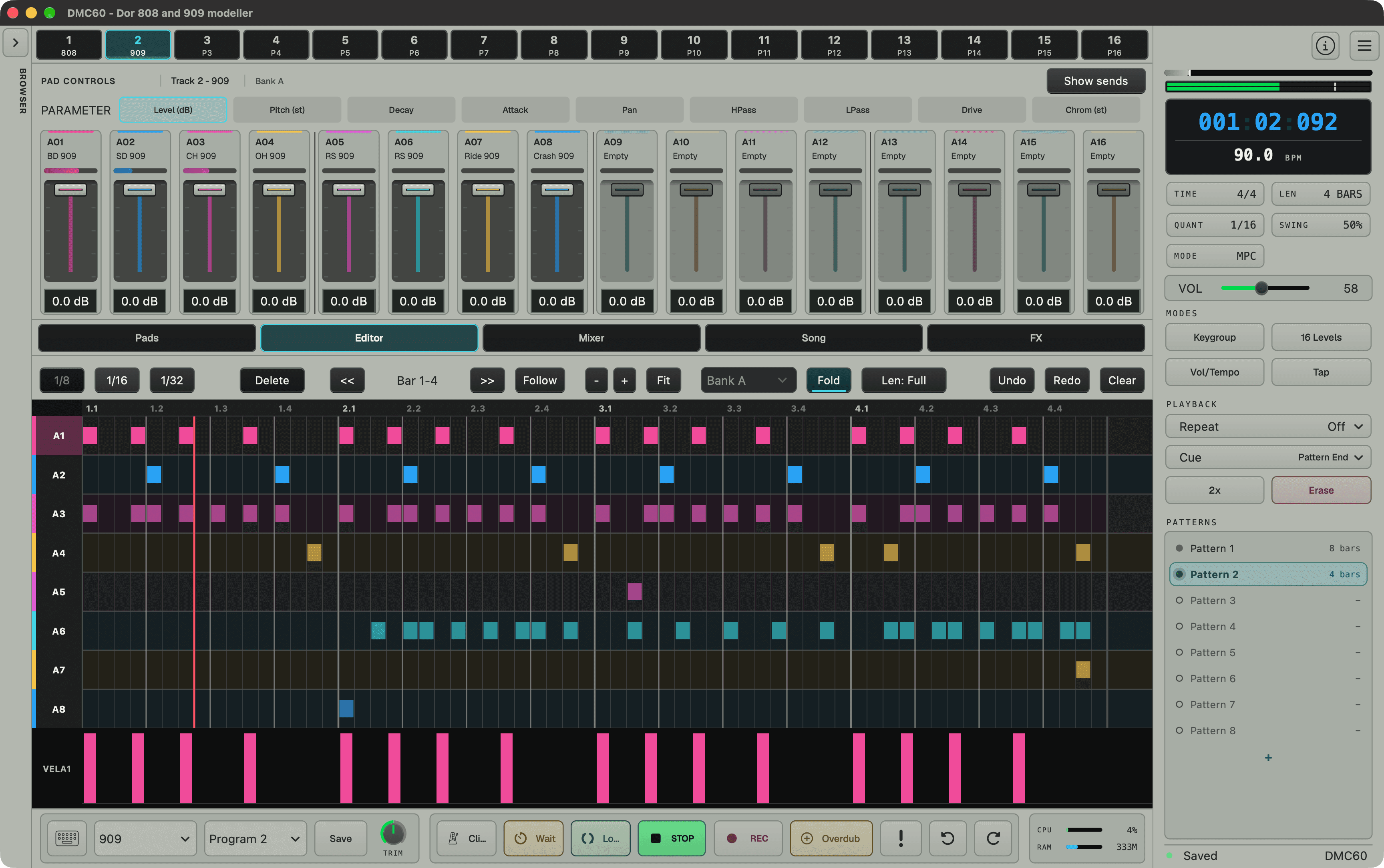
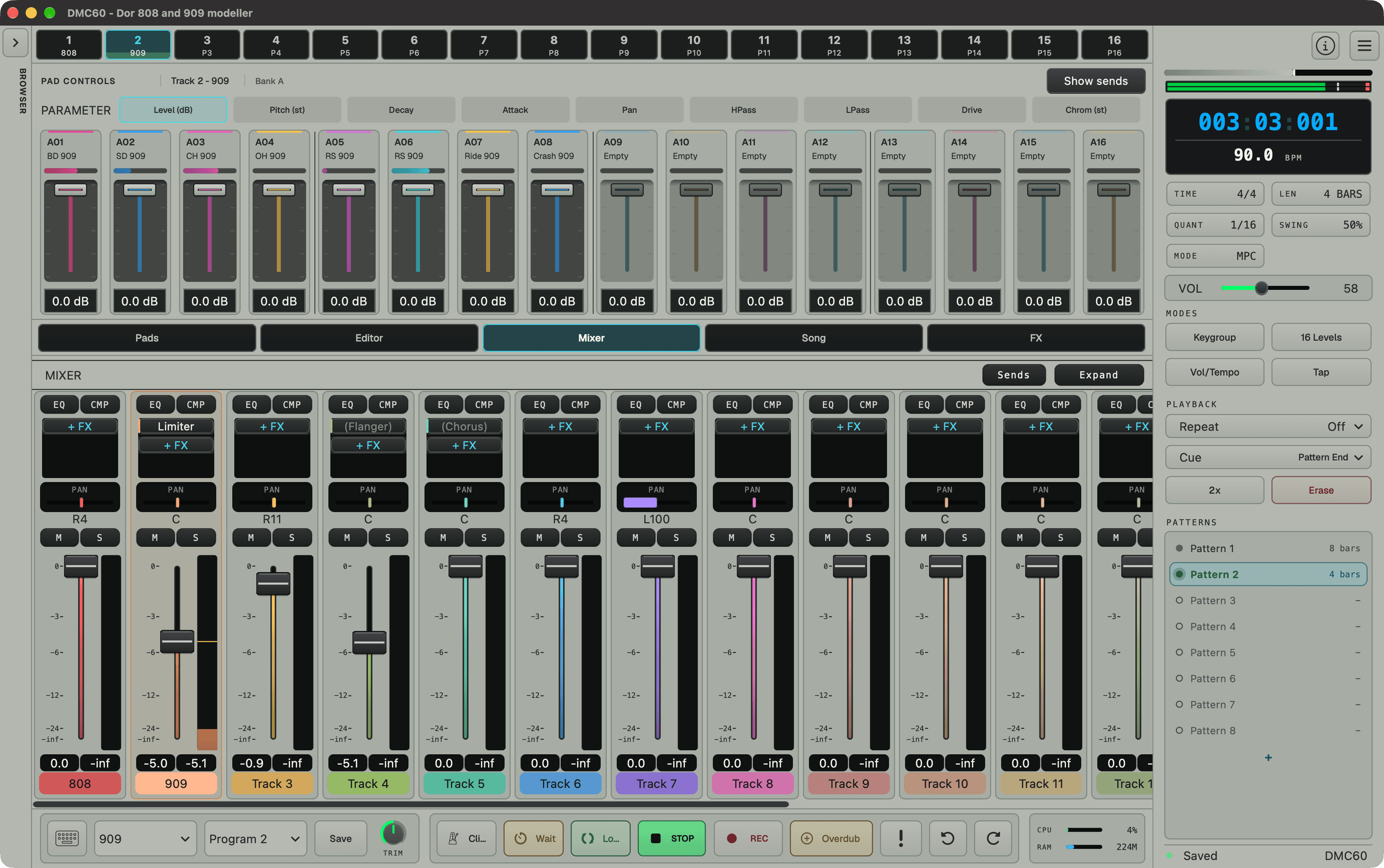
Keep the classic silver workspace, switch to a charcoal Dark chassis, or follow your operating system. It changes instantly across every panel, in the plugin and the standalone app. Drag the strip to compare.
Appearance settingsClassic
Dark
01 / Sequencer
Record live or step by step. Add hardware swing, overdub on the fly, and chain patterns into songs.
Each of the 99 patterns remembers its own levels, pans, and sends.
Six swing settings 50–71%
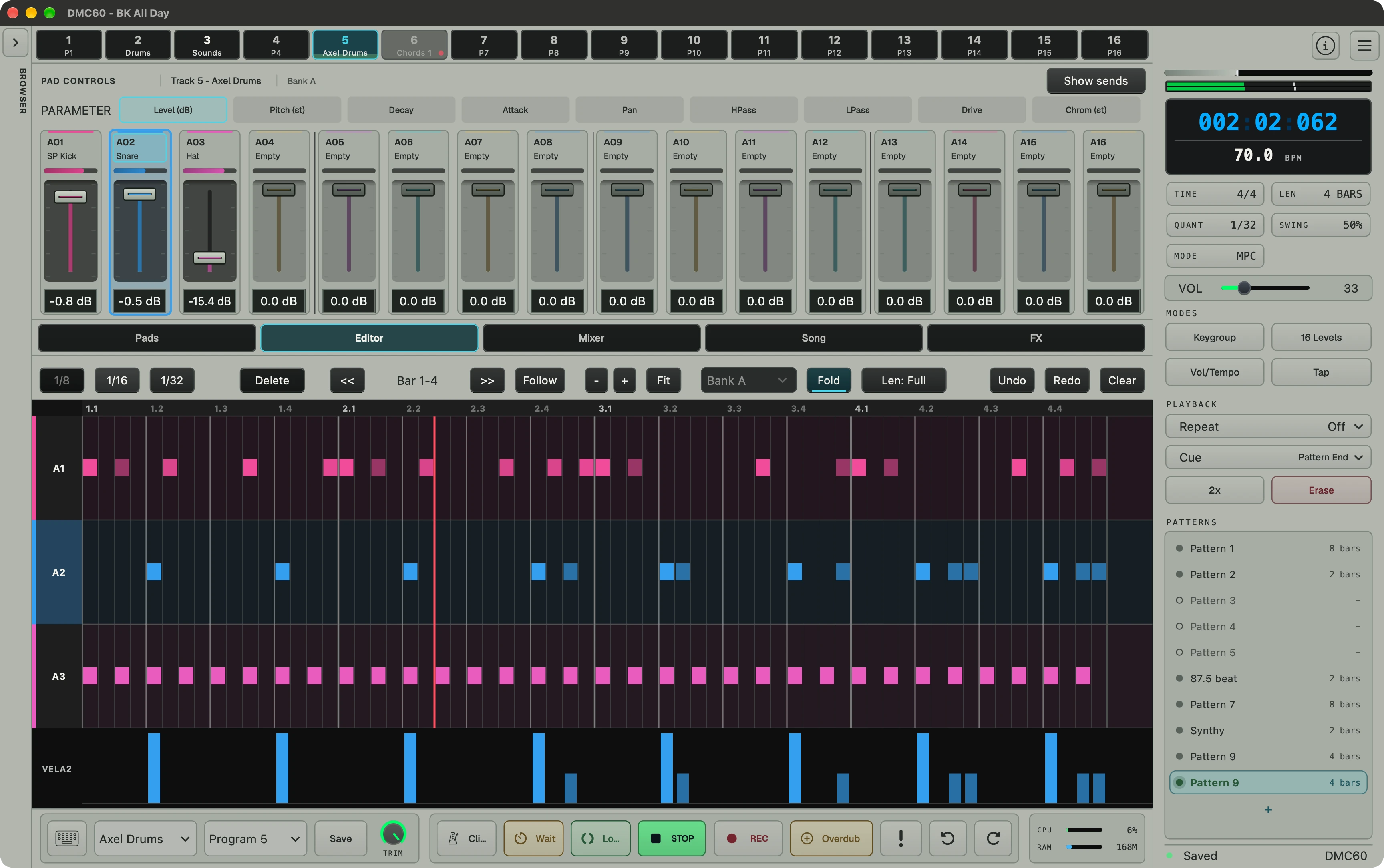
A 1-bar kick, 2-bar snare, and 3-bar hi-hat. Give each track its own cycle and let the groove evolve.
02 / Sampling
Bring your own sounds and make them yours. Shape every pad with pitch, envelopes, filters, and drive.
16 pads per bank 8 banks128 sample slots per kit
Slice by transient, divide evenly, place markers, or tap pads live. Your original sample stays intact.
Fill and name pads automatically. Build a whole library in one pass, or import your Akai MPC .xpm programs.
Capture something new
Record from your audio interface in standalone. Auto clips turns a live take into bar-length slices across the pads.
Explore the sampler03 / Sound character
Go for 12-bit grit and analog filter warmth, or keep the detail of a hi-res recording. Mix different sample resolutions in the same kit.
12bit
26.04 kHz. Crunch, texture, and a little attitude.
24bit
48 kHz. Clean sampling with room for detail.
32bit float
96 kHz. High-resolution capture for your source material.
More ways to play
01
Play across the keyboard with LFOs, envelopes, up to seven unison voices, and glide. Start with factory basses, leads, keys, and pads.
Keygroup synth02
21 drum voices inspired by the 808 and 909. Shape tuning, decay, and tone, or start with factory kits and grooves.
Drum synthThe finishing touches
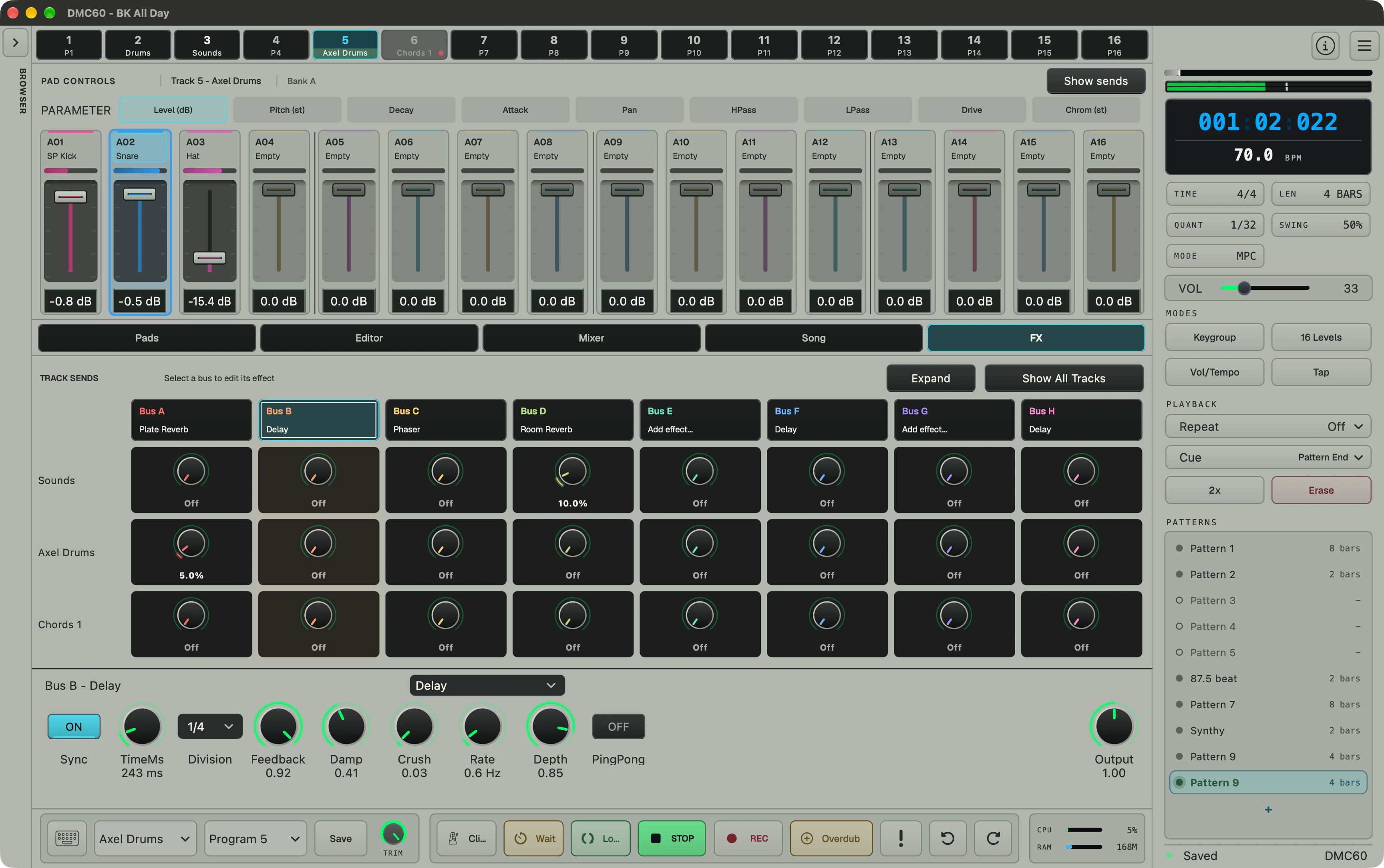
Track EQ, master compression, eight send buses, and six insert slots per track, bus, and master. Shape the mix, then export audio or stems.
Inside the mixer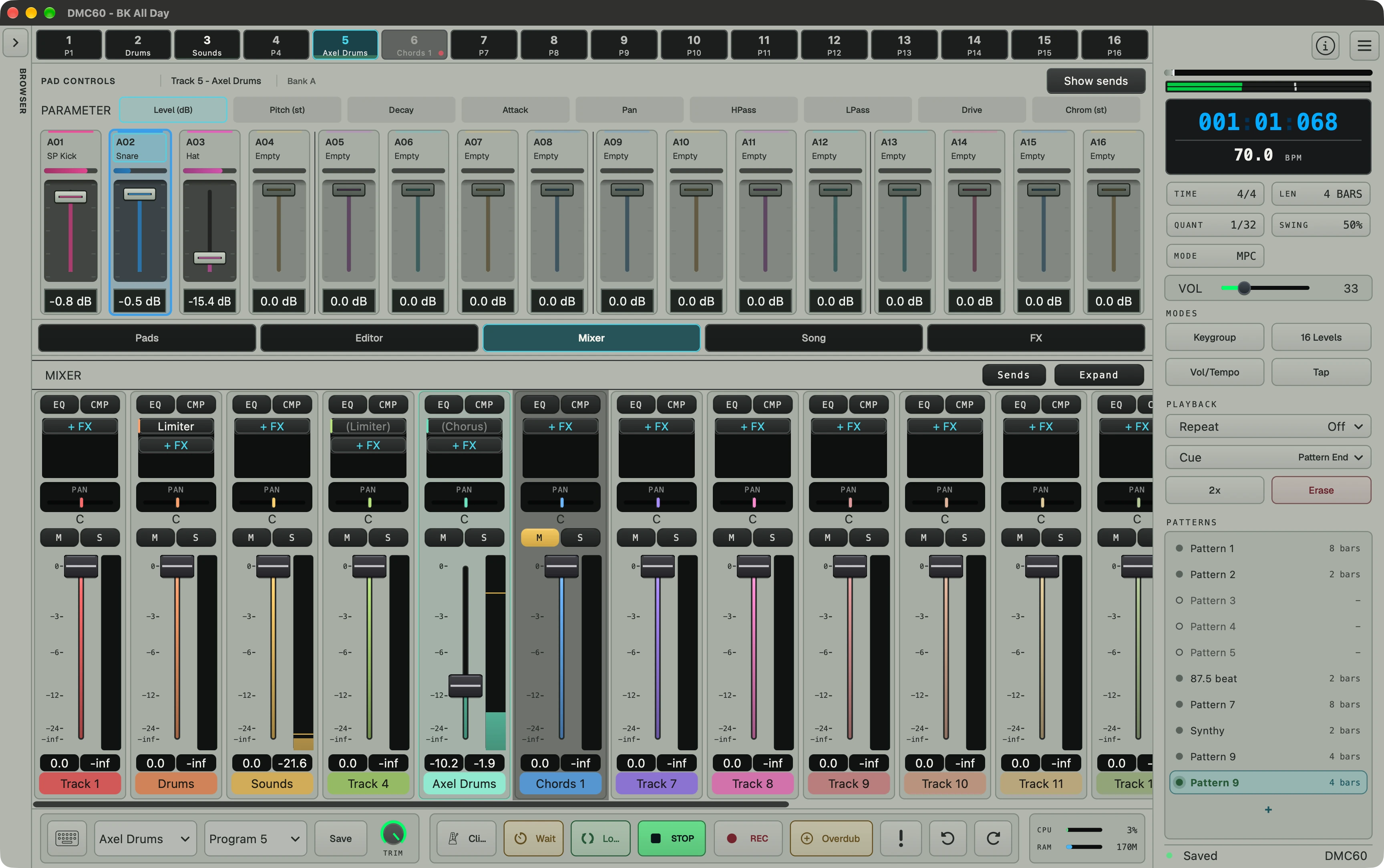
MIDI control with dedicated Arturia MiniLab 3 and KeyLab mkII mappings. Follow your DAW or sync with Ableton Link in standalone.
KeyLab templateChoose display colors and window size. Take projects and kits between computers with 20 GB of optional cloud sync for full (perpetual) licenses.
About cloud syncFrom the studio
Coming from years using hardware like the MPC and the SP, the workflow of DMC60 felt very familiar. Minimal menu diving, great flow state.
Tell other producers how DMC60 fits your workflow. Reviews are published after moderation.
Make your next beat
macOS Sequoia 15 or later · Apple Silicon
VST3 · AU · Standalone
Windows 11
VST3 · Standalone
Pay once. Keep making music. Your perpetual license never expires.
Secure checkout by Stripe with Apple Pay, Google Pay or card. Your license key arrives by email right after payment. Purchase terms
A few more details
Trial, compatibility, and license details in one place.
Read the manualYes. Try the full app for 14 days on up to 2 computers, including saving and export. No credit card required. Your trial key and downloads arrive by email.
macOS Sequoia 15 or later · Apple Silicon · Windows 11. Use VST3 in a compatible Mac or Windows DAW, AU on Mac, or the standalone app without a DAW.
Any DAW that supports VST3 instruments on Mac or Windows, or AU on Mac. You can also use DMC60 standalone.
Standalone and VST3 for Mac and Windows, plus AU for Mac. Activate on up to 3 computers.
A perpetual license is $129, or £99 in the UK. Pay once for a license that never expires. Monthly subscriptions are $9.99 or £7.99 in the UK.
Pay once for a license that never expires, or subscribe monthly to use the same full app while your subscription is active. Monthly plans renew automatically until cancelled; access continues through your paid period. Subscription payments do not build toward a perpetual license.
Yes, through the current major version.
Yes. Your license key and download links arrive by email after checkout or trial signup.
Yes. Load WAV, AIFF, AIF, or FLAC files, or turn a whole folder into a kit.
No. Play samples across the keyboard with the keygroup synth, or start with factory basses, leads, pads, keys, and plucks.
Yes, in the standalone app. Record from your audio interface, then trim and assign the take to a pad. Auto clips splits recordings into tempo-synced, bar-length clips across pads.
Yes. The plugin follows your DAW. Standalone uses Ableton Link to sync with other Link apps and devices on your network.
Click Sync Now in Preferences to sync projects and kits across activated computers. Full (perpetual) licenses include 20 GB. Trials, beta licenses and monthly subscriptions retain 5 GB. Existing full-license customers receive the larger allowance automatically. Uploads are manual; Delete Cloud Data removes your stored files.
No. Import or record at 12-bit, 24-bit, or 32-bit float. The Playback Engine adds vintage character or plays samples at their stored resolution.
44.1 kHz to 192 kHz.
Yes. Import Akai MPC .xpm programs with their pads, layers, and slices.
No. DMC60 takes inspiration from early sampling drum machines, with its own engine and workflow.